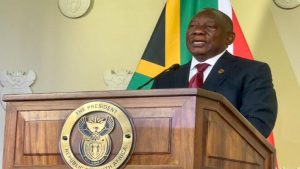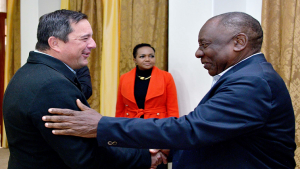


Agriculture Minister John Steenhuisen and Land Reform and Rural Development Minister Mzwanele Nyhontso delivered their maiden budget votes during a mini-plenary session of the National Assembly yesterday.
Nyhontso focussed on among others, the skewed land ownership patterns, while Steenhuisen touched on the important role of the agricultural sector.
The Agriculture, Land and Rural Development Ministry previously headed by Thoko Didiza in the 6th administration is now split into two.
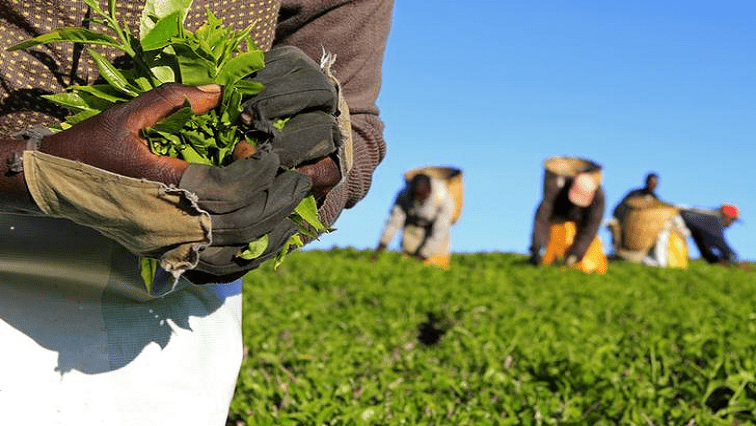
Steenhuisen said the agricultural sector continued to play a critical role in the economy despite some of the challenges that the country has been facing.
“Make no mistake, agriculture is one of those primary industries that play an essential role in the creation of food, the creation of employment, the enhancement of rural economies and the generation of foreign earnings. The sector contributes on average of 2.8% of the national economy measured in gross domestic products. And roughly 6% to total employment.”
“However, when food manufacturing is combined, both the agriculture and food sectors contribute up to 7% of the GDP. Between the period 2019 and 2023, the agricultural sector performed relatively well, compared to the other sectors in the economy,” said Steenhuisen.
“This is despite the challenges that were brought around as a result of the COVID-19 pandemic and the lockdown regulations, the July 21 unrest, which disrupted supply chains and the conflict between Russia and Ukraine which saw input costs and tariffs and trade flows of commodities like fertilizer, sunflower and rice among others being affected. Despite this during that period, the agricultural economy increased by more than 25% in value added,” he added.
The video below reports more on the story:
Meanwhile, Nyhontso said South Africa remains an unequal society as land and tenure rights are still in the hands of the privileged few.
“In moments like this, we need to briefly pause and reflect on the efforts of government in implementing land reform programmes in the last six administrations. The efforts were aimed at reversing the legacy of 3.7 centuries of the colonial apartheid policy of land and dispossessions and denial of the majority of indigenous citizens of this country access to land and security of tenure. Besides these efforts, the country still remains an unequal society and access to land and security of tenure rights are limited to some privileged people.”
“The current skewed land ownership patterns in equitable access to land in tenure and security flies against the spirit and the letter of Section 25(6)(7) of the Constitution that enjoins the state to ensure equitable access to land, security of tenure and the restoration or equitable redress. Land is one of the key economic factors of production. In order to unlock the economic potential of our country and to eradicate the evils of triple challenges of poverty unemployment and inequality, land reform has to be prioritised and accelerated,” said Nyhontso.
During the debate, RISE Mzansi leader Songezo Zibi raised concerns about a decreased budget for the two departments and how it affects social and economic justice.
“I note honourable Ministers, notwithstanding, the department’s budget has been cut again, which is a demoralising blow to small farmers and land owners who work hard every day to make a living off the land. It is also a blow to what he describes as the long-standing obligation to deliver land justice to the historically dispossessed South Africans. I am also aware that the budget vote was formulated by the previous administration. I am going to focus on a frame ableism as we are to have social and economic justice as instructed by our Constitution. Three things need to be done by the department in both its current and new form to ensure that South Africans in both rural and urban settings live prosperous and dignified lives.”
Zibi added: “Firstly, spatial planning and justice especially in rural areas. Those of us from rural communities have seen how villages and our surrounding towns have either grown or collapsed due in part to a lack of planning. It is important that the government at national, provincial and local spheres, work with traditional authorities and this department to ensure there is order in how settlements are expanded, that there is sufficient provision of infrastructure, there is water to every home so that people can make meaningful use of the land that they have.”